
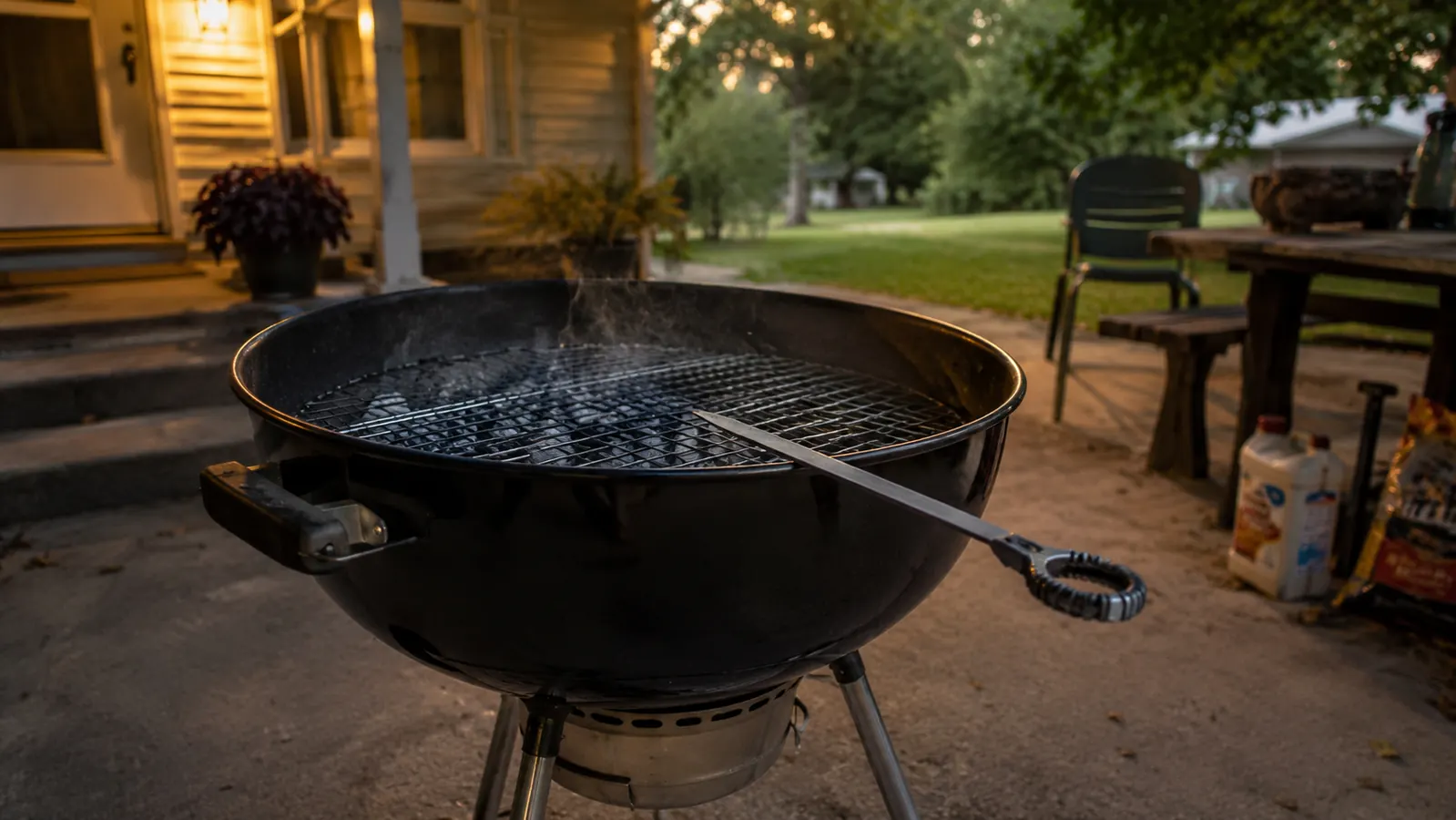
The first time I tried to add charcoal to my 22-inch kettle mid-cook without a proper tool, I used a pair of tongs to walk the grate off sideways, and it slid, and I caught the edge of it with the meat of my palm. That was two summers ago, before I owned a DELSbbq grate lifter, and I still remember standing at the kitchen sink running cold water over my hand while a rack of ribs sat exposed and losing heat on the counter. Renata came in from the garden, looked at my hand, then looked at the ribs, and said I needed to figure out a better system before somebody got hurt worse than me.
This review covers what happened after I bought the DELSbbq lifter that fall and used it through an entire grilling season, from the first warm Saturday in April through my brother's cattle-branding day in late September. I'm not talking about one or two cookouts. I'm talking about the tool that's lived on a hook next to my kettle for going on a year now, the one I reach for every single time I need to get more charcoal under a rack of ribs or a pork butt without shutting the whole cook down.
The Quick Verdict
A simple cast iron hook that does exactly one job, lifting a hot cooking grate clear of the fire, and does it better than anything else I tried first.
Amazon Check Today's Price →Stop losing your grip on a 500-degree grate
If you've ever tried to move a hot cooking grate with tongs, a towel, or your bare hand, you already know how that story ends. The DELSbbq lifter is built for exactly this one job.
Amazon Check Today's Price on Amazon →How I've Used It All Season
My kettle setup is a snake method most of the time, charcoal laid in a half-circle around the edge of the coal grate so a rack of ribs or a pork butt can go low and slow for four to six hours. The problem with that method is the fire needs feeding. Somewhere around hour three, the lit end of the snake starts running thin, and if I don't add fresh charcoal ahead of it, the temperature drops and stays dropped. That means lifting a cooking grate that's had meat and smoke on it for three hours, which is hot enough to raise a blister through a thin oven mitt.
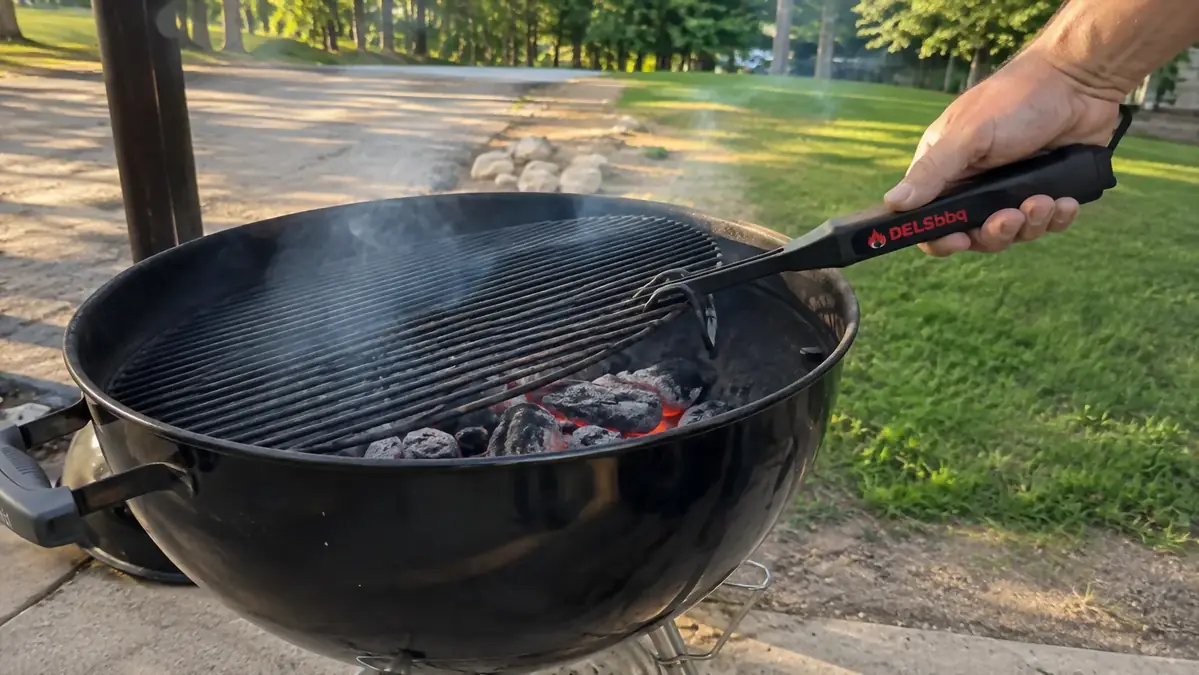
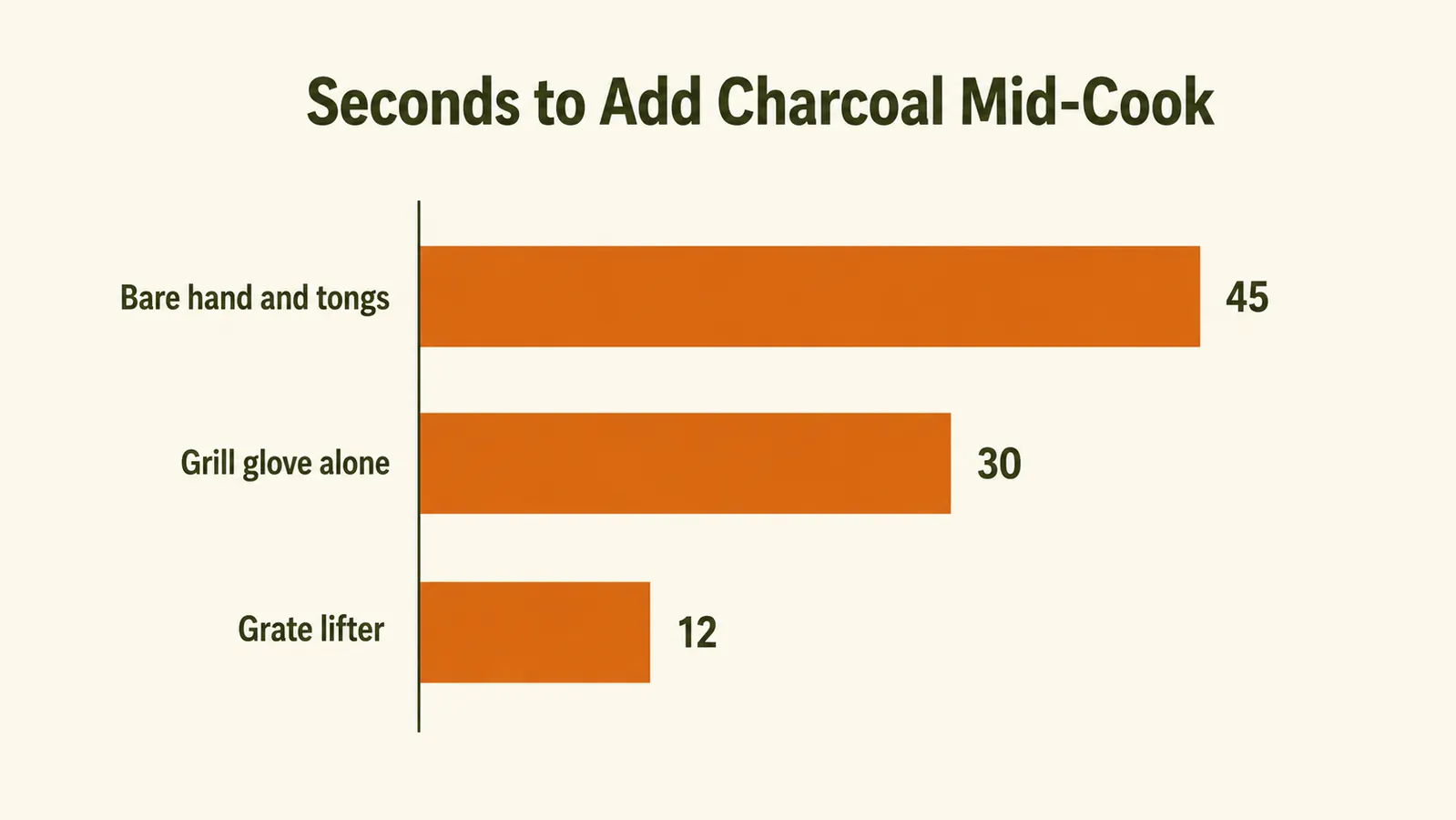
The DELSbbq lifter hooks under the edge bars of the grate and gives me a full eight inches of cast iron handle between my hand and the metal. I've used it on every cook this season where I needed to add fuel mid-way through: two Easter cookouts, a graduation party for one of Danielle's friends, my brother's cattle-branding day, and probably fifteen regular Saturday cooks in between. The motion is the same every time. Hook, lift, set the grate on the side table, feed the fire, hook, lift, set it back. It takes maybe twenty seconds, and I'm not standing over open coals with my forearm exposed the whole time.
What surprised me is how much I started using it for things that weren't mid-cook fuel additions. Pulling the whole cooking grate off to check coal level, moving it aside to add a chunk of hickory for smoke, even just lifting one side to peek at how the fire's burning without dragging food around. Once the tool earns a spot on the hook by the grill, you find more jobs for it than the one you bought it for.
The Hook Design, and Why It Matters More Than It Looks Like It Would
It's cast iron, shaped like a long question mark, with the curved end made to catch the round or flat edge bars that most kettle and offset grates use. DELSbbq sells it as a universal fit, and on my kettle grate it catches clean every time, no fishing around for the right angle. I've also used it on my brother's offset smoker grate when I'm over there for the cattle-branding cook, and it grabs that one just as well, even though the bar profile is a little different.
The weight is the part nobody mentions in the product photos. This isn't a stamped steel hook that flexes when you lean into it. It's solid cast iron, heavy enough that you feel it the first time you pick it up off the hardware store shelf, and that weight is exactly what keeps it steady when you've got a full rack of ribs balanced on the grate you're lifting. A lighter tool wobbles under that kind of load. This one doesn't.
The tradeoff is that it's not a tool you'd want to carry around in a duffel bag to a friend's place. It's a dedicated hook that stays home. For me that's fine, since I do almost all my cooking on the same kettle in the same driveway, but if you're the type who grills at other people's houses regularly, keep that in mind.
The Overnight Brisket That Really Put It to the Test
The best test this tool got all season was a fourteen-pound brisket I ran overnight on Labor Day weekend, back when Owen was still home and wanted to see the whole cook through. I put the brisket on around ten at night, planning to feed the fire twice before sunrise, once around one in the morning and again closer to four. That means going out to the driveway in the dark, headlamp on, coffee in one hand, and lifting a grate that's had eight hours of smoke and heat built up under it.
That's exactly the situation where a proper lifter earns its keep. At one in the morning I'm not thinking clearly, I'm tired, and the last thing I need is to be fumbling with tongs and a towel trying to guess where the edge bars are by feel. The DELSbbq lifter hooks on by touch alone, no need to see exactly what I'm doing, because the curve only fits one way and it just settles into place. I fed the fire, checked the meat, and had the grate back down in under a minute both times, without waking half the street or burning myself half asleep.
Owen came out for the four o'clock feed just to watch, and afterward he said it was the first overnight brisket where he didn't hear me swearing at some point in the yard. That's not nothing. A long cook has enough variables you can't control, wind, temperature swings, how the bark sets up. Not having to fight the tool for getting fuel in is one less thing working against you at four in the morning.
How It's Held Up Over the Season
Cast iron either takes care of itself or it rusts on you, and I was honestly waiting to see which one this would be. I keep the DELSbbq lifter on an outdoor hook next to the kettle, exposed to whatever weather we get outside Springfield, and it picked up a light haze of surface rust twice, once in early spring after a wet stretch and once in July after a run of humid days. Both times a green scrub pad and about two minutes of work took it right back to bare metal. It's not the kind of rust that pits or eats into the tool, it just sits on the surface until you knock it off.
The handle end has stayed comfortable to grip the whole season, no cracking, no loose rivets, nothing coming apart at any joint because there isn't one, it's a single piece of cast iron. I did notice the curved hook end picking up a bit of a seasoned, almost blackened look from being near the coals over and over, which honestly looks the way a well-used grill tool should look. Gil borrowed it for a Fourth of July cookout at his place and brought it back a week later with a little more of that same patina on it and a promise to buy his own before Labor Day. He didn't.
The one thing I'd flag for anyone buying this expecting it to stay looking new is that it won't. This is a working tool that sits next to a fire. If you want something that still looks showroom-fresh after a season, this isn't that. If you want something that still works exactly the same after a season, it is that.
What I Was Using Before, and Why I Switched
Before the DELSbbq lifter, my system was a pair of long tongs and a folded-up dish towel, which is about as improvised as it sounds. The tongs were fine for moving food, terrible for moving an entire grate, because the grip points on most kettle grates aren't built for tongs to clamp onto securely. The towel helped with heat but did nothing for grip, and more than once the grate slid halfway off before I got it settled on the side table. That's the setup that put me in the kitchen sink that first summer. See our full grate lifter versus grill gloves comparison for how the two methods actually stack up side by side, because gloves were the other thing I tried before landing on this.
I also went through a stretch with a pair of heavy silicone-lined grill gloves, which handled the heat well enough but didn't solve the actual problem, which is that lifting a flat, awkward, heavy grate with your fingers alone is unstable no matter how heat-resistant those fingers are. The gloves protected my hands from burns. They did nothing to keep the grate from tipping. The DELSbbq lifter solved both problems at once, heat and grip, because the hook does the holding and my hand never gets closer than eight inches from the metal.
What I Liked
- Eight-inch handle keeps your hand well clear of a hot grate
- Solid cast iron construction, no wobble under a loaded grate
- Universal hook catches most kettle and offset grate bar styles
- Cuts mid-cook charcoal additions down to about twenty seconds
- Cheap enough that there's no reason not to own one
Where It Falls Short
- Picks up surface rust if you leave it outside through wet weather
- Not something you'd want to pack along to someone else's cookout
- The hook shape only works on grates with an edge bar to catch, not every grill design has one
- Gets a blackened, used look fast, which some people won't love
It doesn't do anything fancy. It just gets my hand eight inches farther from the fire than it used to be, and that's turned out to be exactly what I needed.

Who This Is For
If you cook low and slow on a charcoal kettle, an offset, or anything else where you're feeding a fire over several hours, this tool earns its keep fast. Anyone running the snake method, doing overnight briskets, or just cooking for a crowd where the fire has to last through a long afternoon is going to end up lifting a hot grate sooner or later. Better to do it with a tool built for the job than with whatever's within reach. It's also just a smart addition to a grill cart even if you're not doing long cooks, because cleaning under a grate or checking coal level comes up on every single cookout, including the other reasons I'd never go back to cooking without one, church potlucks included.
It also matters more than people expect if you cook for a crowd. When Danielle brings a group of her friends over, or when the church potluck sign-up sheet has my name next to a full brisket, I'm not the only one who needs the fire to keep running while I'm also plating food, refilling drinks, and answering questions about how long the ribs have got left. Being able to lift the grate, feed the fire, and set it back down in under a minute without stopping everything else I'm doing is worth more on those days than any other day of the season.
Who Should Skip It
If you're grilling on a small tabletop propane unit where the grate barely gets warm enough to need lifting, or if your grill design doesn't have an edge bar for the hook to catch, this particular tool isn't going to earn a spot on your hook. Gas grill owners who never touch the cooking grate mid-cook probably won't get much use out of it either. This is built for solid fuel cooking where the grate actually needs to come off the fire while it's still hot.
Add charcoal without adding a burn to your Saturday
A season of mid-cook charcoal runs, church potlucks, and one borrowed-and-not-returned trip to Gil's driveway later, this is still the tool hanging next to my kettle. See what it costs right now.
Amazon Check Today's Price on Amazon →