
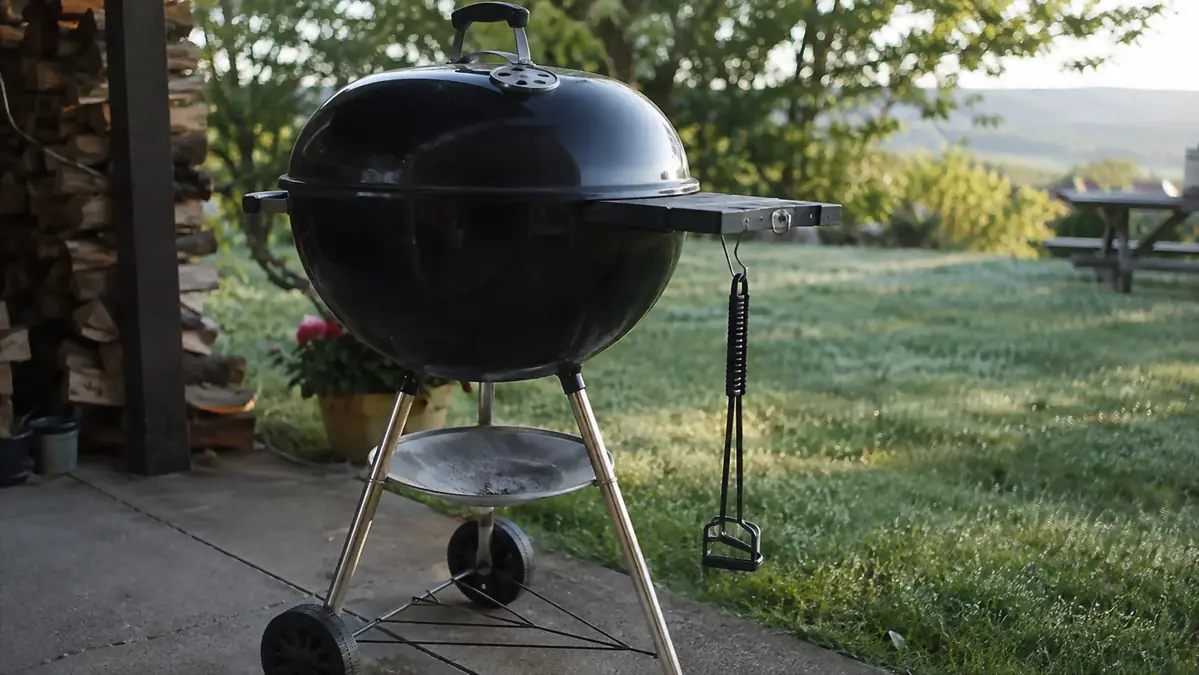
I didn't think a grate lifter was worth owning until Renata found me standing at the sink running cold water over my knuckles for the second summer in a row. I'd been using tongs and a folded dish towel to muscle a hot cooking grate off my kettle, and it kept going wrong the same way. That was before I bought the DELSbbq cast iron lifter, and I'll admit I bought it more out of stubbornness than conviction, figuring an eight-inch hook of iron couldn't possibly be worth adding to a grill cart that already had enough tools hanging off it. A year of cookouts later, church potlucks, my brother's cattle-branding day, Danielle bringing a driveway full of her friends, I've changed my mind on every count. Here are ten separate jobs that tool ended up doing, not just the one I bought it for.
None of these ten reasons are about the thing most people assume a grate lifter is for, hauling fresh charcoal onto a mid-cook fire. I've already covered that ground in a full season with the DELSbbq lifter on my kettle. What follows is everything else it's earned a spot on the hook for, the stuff that surprised me more than the fire-feeding did.
One hook, ten reasons it never leaves the hook by my grill
The DELSbbq cast iron grate lifter does more work around my grill cart than most of the tools I paid real money for. See what it runs today.
Amazon Check Today's Price on Amazon →It Lets Me Oil the Grate Before the Fire's Even Lit
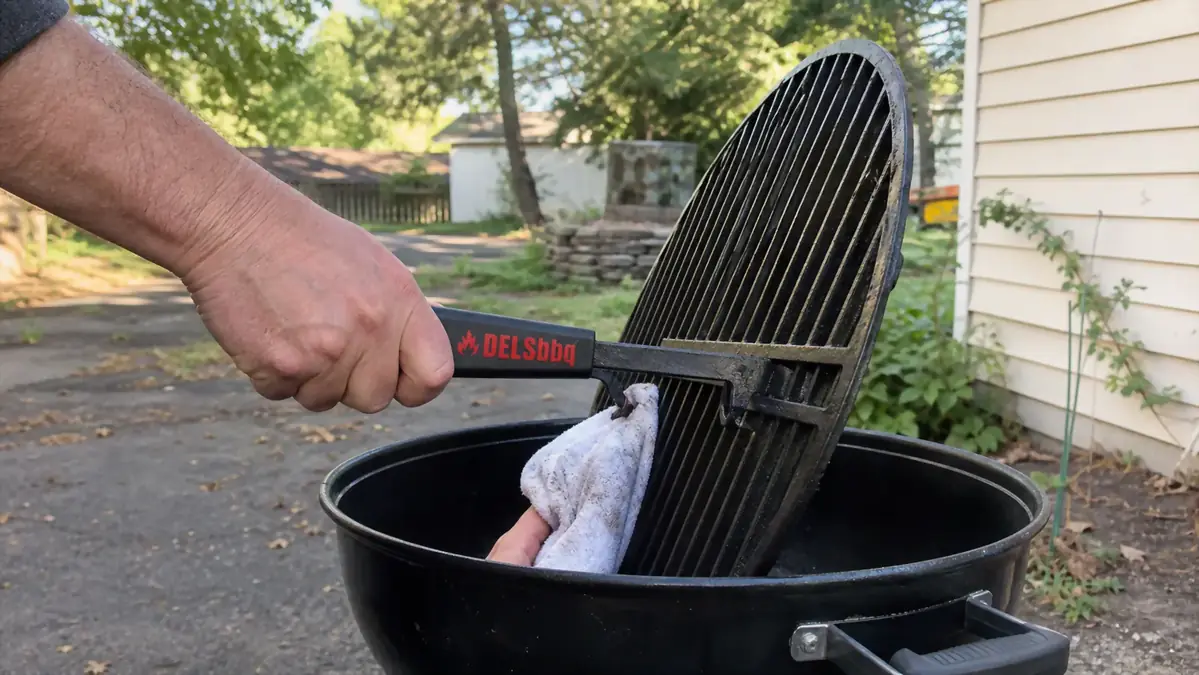
Every cook I run starts the same way, wiping the cooking grate down with a rag and a little oil so nothing sticks once the coals are going. Doing that with a cold grate sitting flat on the kettle means bending over at an awkward angle and getting oil on my knuckles in the process. Hooking the grate and holding it up at a working height, propped against the kettle's edge, means both sides get an even coat in about a minute, no crouching, no mess on my hands before I've even started.
Ash Falls Through the Vents Without Me Lifting the Whole Kettle
A kettle grill needs the ash knocked down every so often so air can actually reach the coals, and doing that with the cooking grate still in place means either working around it or lifting the whole thing off with your bare hands while it's still warm from the last cook. Hooking the grate up and out of the way for the thirty seconds it takes to rake the ash bed clean is a small job that used to be a bigger, hotter one.
I Can Check the Coal Burn Without Touching Whatever's Cooking
Halfway through a cook I want to know how the fire's actually doing, whether the coals are burning even or piling up hot on one side, without dragging a rack of ribs or a pork butt around to see underneath it. The lifter tips the grate just enough to look, then sets it right back down in the same spot. No shifting food, no losing my grate marks, no guessing.
End-of-Cook Cleanup Actually Gets Done Instead of Put Off
A dirty grate is easy to ignore when the alternative is grabbing it bare-handed while it's still got heat in it. With the lifter, pulling the whole grate off for a real scrub with a wire brush and hot water takes no extra effort, so I actually do it after most cooks instead of letting the crust build up for three weekends in a row like I used to.

My Knuckles Stay Out of Grease Flare-Ups
Anything with real fat on it, a pork butt, a rack of ribs, burgers for a crowd, is going to drip and flare up eventually, usually right when I'm reaching in to adjust the grate. An eight-inch cast iron handle keeps my hand well clear of that flare instead of right over it. I've had grease pop up at me plenty of times over the years. It's never once caught the handle.
No More Digging for a Screwdriver or a Stick
Before I owned a real lifter, my backup plan when the tongs failed was whatever was within reach, a flathead screwdriver, a stick from the yard, once a barbecue fork that bent under the weight. None of that is a plan, it's a scramble, and it happens at the worst possible moment, when the grate's already hot and something's about to burn. Having one dedicated tool means I've stopped improvising with things that were never meant to touch a fire. If you're still weighing tools against each other, see how it compares to a pair of grill gloves for the same job.
It Works on My Brother's Offset, Not Just My Kettle
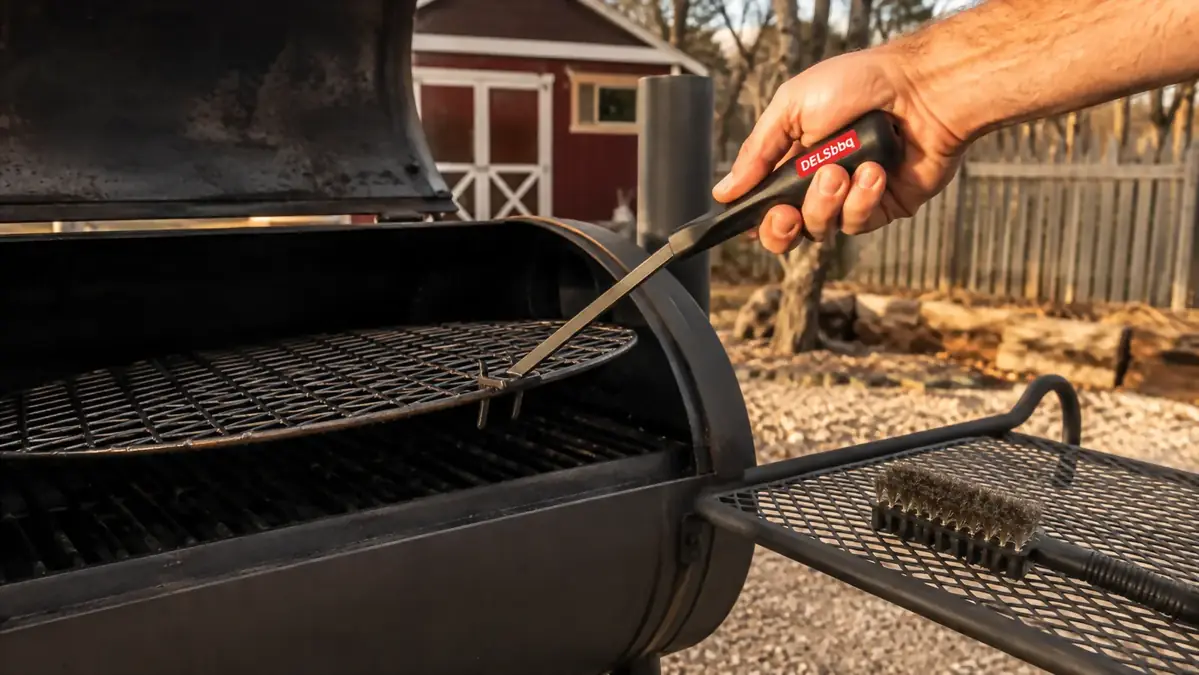
DELSbbq calls it a universal fit, and I didn't believe that until I used it on my brother's offset smoker at his place during his cattle-branding cook last fall. The hook catches the edge bar on that grate just as clean as it does on my kettle, even though the bar profile's a little different. One tool that travels between grills is worth more than a tool that only works on the one you own.
I've Got a Free Hand for a Plate, Tongs, or a Drink
When I'm cooking for a crowd, church potlucks especially, I'm rarely doing one thing at a time. Being able to lift a grate with one hand while the other's holding a plate of ribs headed to the table, or a pair of tongs I'm not ready to set down, or honestly just a drink, matters more than it sounds like it would. A two-handed job turns into a one-handed job, and that frees up the rest of me for everything else going on around the grill.
Kids and Guests Stay Back Because the Job's Fast
When Danielle's friends are standing around the driveway during a cookout, I don't want anyone leaning in close while I'm fumbling with a hot grate and a towel. Hook, lift, set it down, done in a few seconds instead of a slow, awkward struggle that draws people closer to see what's taking so long. Fast and clean around open coals is safer for everybody standing nearby, not just for me.
The Grate Itself Lasts Longer
Dragging a cooking grate sideways with tongs or dropping it because a towel slipped isn't just rough on your hands, it's rough on the grate. Mine still sits flat and even after a full season of being lifted the right way instead of yanked and dropped. A grate that's warped from getting banged around doesn't sit right on the kettle anymore, and replacing one costs more time and hassle than the lifter that would've kept it in shape.
What I'd Skip
I tried a stamped steel version of a grate hook before I landed on the DELSbbq one, bought cheap at a hardware store because it looked close enough in the photo. It flexed under any real weight, which is the last thing you want when a loaded grate is hanging off the end of it. I'd skip anything that isn't solid cast iron, the weight is what keeps it steady, not a feature you notice until it's missing.
I'd also skip talking yourself out of buying one because it feels like a small, unnecessary purchase. That's exactly what I thought the first two summers I went without one, and it's the same stretch of time I spent running cold water over my hand more than once. The DELSbbq lifter doesn't take up space on the cart and it doesn't cost much to own. There's no real reason to keep doing this the hard way once you've seen what it fixes.
It's not a fancy tool. It's just the one thing on my cart that keeps doing more jobs than I bought it for.
Ten reasons, one cheap tool, zero burned knuckles
From oiling the grate before the fire's lit to keeping guests back from the coals, the DELSbbq lifter earns its spot for reasons that have nothing to do with charcoal. See what it costs today.
Amazon Check Today's Price on Amazon →