
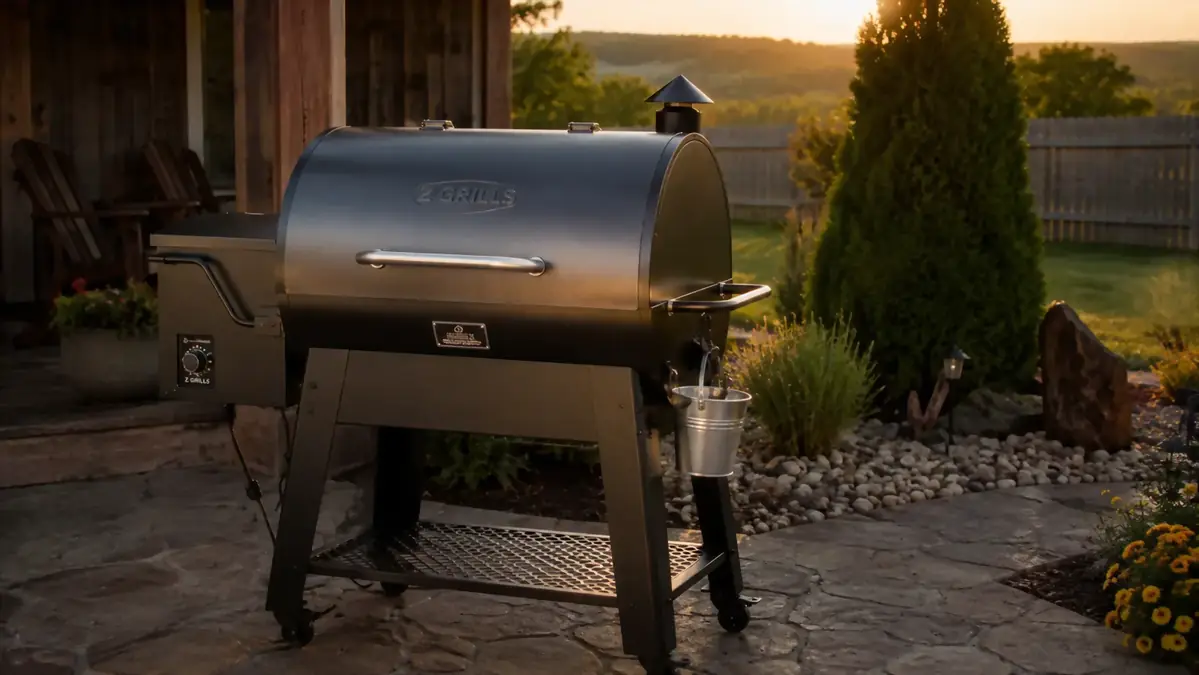
I bought the Traeger HDW152 grease bucket the week after I scraped hardened grease off my patio slab for the third time in one month. I'd been running a mid-size pellet rig on the back patio for about two years by then, mostly stock, and the little drip tray it came with was never built for the volume of pork butts and chicken thighs I was putting through it most weekends. Renata finally said something about the stain spreading toward the door, and that was the push I needed.
It's been about a year now. Same grill, same bucket, dozens of cooks in between, everything from a rack of ribs on a random Tuesday to a full brisket for my brother's cattle-branding day crowd. I've watched the bucket hold up, and I've watched exactly where it falls short, so this is the long version, not the first-week impression.
The Quick Verdict
A year in, the Traeger grease bucket is still hanging off my grill every weekend. It's not fancy, it just quietly does the one job it was built for.
Amazon Check Today's Price →Tired of scraping grease off the patio slab every weekend?
The Traeger HDW152 bucket routes drippings straight into a liner bag instead of onto your concrete. Check today's price on Amazon before your next cook.
Amazon Check Today's Price on Amazon →How I've Used It
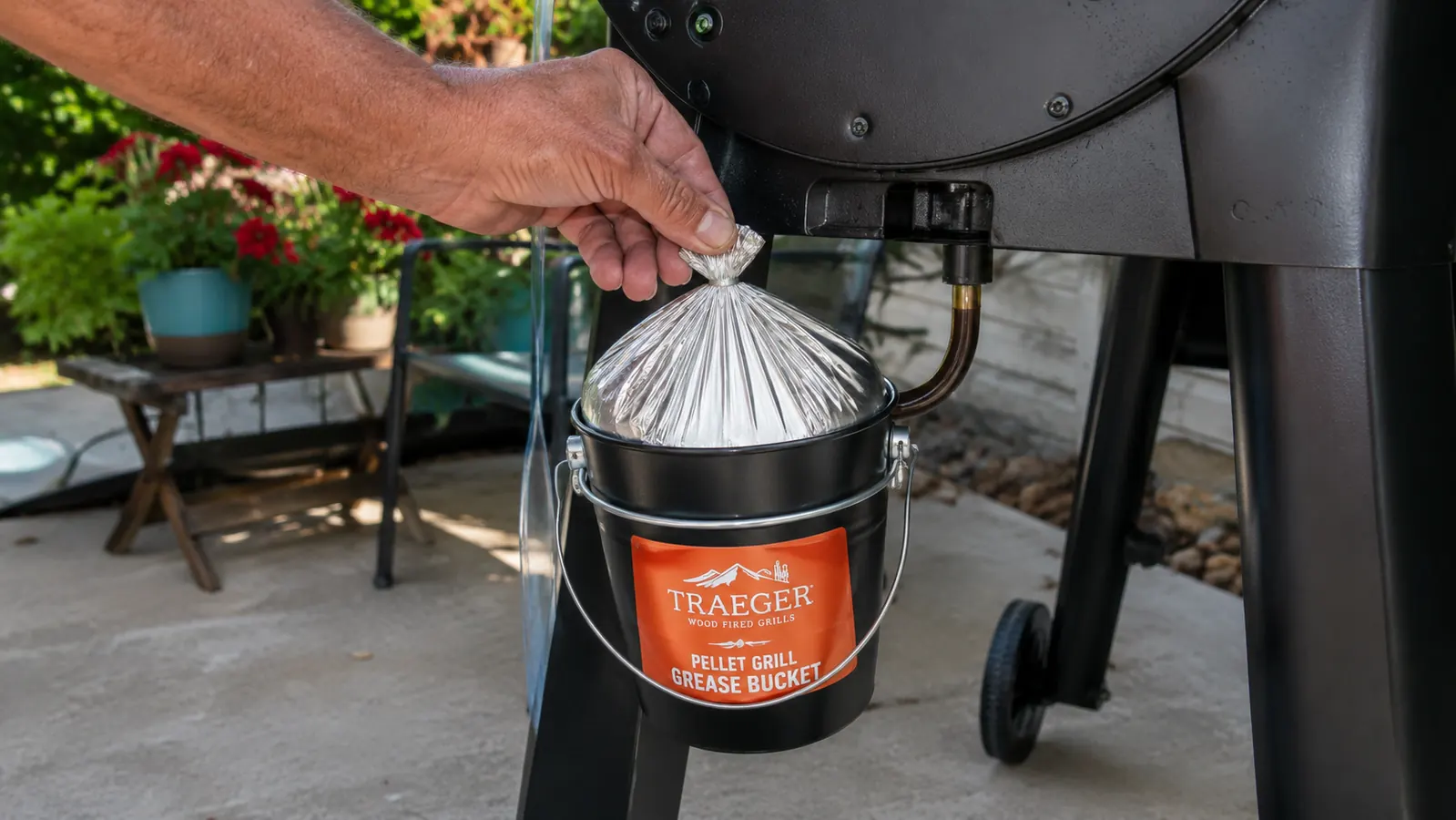
The setup is about as simple as grill accessories get. A small bucket, roughly the size of a large coffee can, hooks onto a bracket that mounts on the side of the grill under the drain tube. You drop one of the liner bags in, fold the top over the rim, and the grease runs straight into it instead of pooling in the old drip tray. On my grill it took maybe ten minutes to install the bracket, most of that spent figuring out which two existing screws to reuse.
For the first couple of months I ran it exactly like the instructions showed, a fresh liner every single cook. That got expensive faster than I expected, so I started stretching a liner across two or three shorter cooks, chicken thighs or a couple of racks of ribs, and saving the fresh ones for anything with real fat content like a pork butt or a full brisket. That's the rhythm I've settled into a year later, and it works.
The one habit that actually matters is checking the bucket before you walk away from a long cook. I learned that the hard way about six weeks in, when a liner filled higher than I expected during an overnight pork butt and I found grease pooled at the bottom of the bucket itself the next morning. Nothing spilled, but it was close enough that I now glance at it every time I'm out there refilling the hopper.
Owen still comes back for brisket even though he moved out a couple of years ago, and it's usually his visits that push the grill hardest since he's never shy about asking for a second rack. Last October I ran two full racks of ribs back to back for one of his weekend visits, close to eight hours on the grill between them, and the bucket only needed the liner changed once, at the halfway point. That's the kind of stretch that used to mean scraping the drip tray twice in one afternoon.
What's Actually in the Bucket System
The Traeger bucket itself is stamped metal with a wire handle and a simple hook that catches the bracket. It's not insulated or anything special, it's a bucket. What makes it work is the fit with the drain tube, which channels drippings down and away from the firepot instead of letting them run down the outside of the grill body the way mine used to before I had this in place. That was the actual problem I was solving, not the grease itself but where it was ending up.
The liner bags are heat-resistant foil, sold separately, and Traeger sizes them specifically for this bucket. I tried a box of generic oven bags once when I was between orders, and they were close enough in size to work but noticeably thinner. One tore on me during a long cook, which is the only time in a year I've had grease actually reach the bottom of the bucket instead of staying contained in the liner. I went back to the real Traeger liners after that and haven't had it happen since.
There's also a drain tube grommet where it meets the firepot, and that's the one part I check every couple of months. Wood pellet ash is fine and dusty, and if it builds up around that fitting the flow slows down. A quick brush-out with an old toothbrush keeps it moving. It's a two-minute job, but it's the kind of thing you'd never think to check if nobody told you.
How It's Held Up Cook After Cook
A year of weekly use is a fair test for something this simple, and the bucket itself still looks close to new. No rust, no dents, the hook still grips the bracket tight. The bracket has loosened once, probably from being knocked around while I'm moving the grill in and out of the garage for winter, and a quarter turn on the mounting screws fixed it in under a minute.
Where I've seen real wear is on the liner side, not the bucket. The foil bags do exactly what they're supposed to for a normal cook, but on the longest smokes, twelve hours or more, I've had the bag sag under the weight of the grease enough that it presses against the sides of the bucket instead of hanging free. It still catches everything, it just doesn't look as tidy by the end of a long overnight brisket. If you've read my comparison of the Traeger bucket against a foil catch pan, that sag is one of the few places the plain foil pan actually holds its shape better.
I've also noticed the temperature matters. On cold-weather cooks, the grease sets up almost solid in the bucket by the time I get out there the next morning, which honestly makes cleanup easier since I can just lift the whole liner out like a bag of frozen soup. In the middle of summer it stays liquid longer, and that's when I've come closest to a spill carrying it to the trash.
My neighbor Gil borrowed the bucket itself for a couple of weeks last spring after his own grill's drip pan rusted clean through, and when I finally got it back the bracket had a scuff mark I didn't put there and one screw was slightly stripped. Nothing that kept it from working, but it told me the mounting hardware isn't quite as forgiving as the bucket itself when someone else is taking it on and off every few days.

Where It's Actually Saved Me
The clearest win has been at bigger cookouts. When Danielle's friends take over the driveway for a Saturday, or the church potlucks land three cooks back to back on a Sunday, I'm running the grill hard for hours at a stretch, and the old drip tray simply couldn't keep up with that kind of volume. The Traeger bucket has meant I can run four or five hours straight without checking anything more than a glance, then swap the liner once at the end instead of scraping a pan mid-cookout with guests standing around.
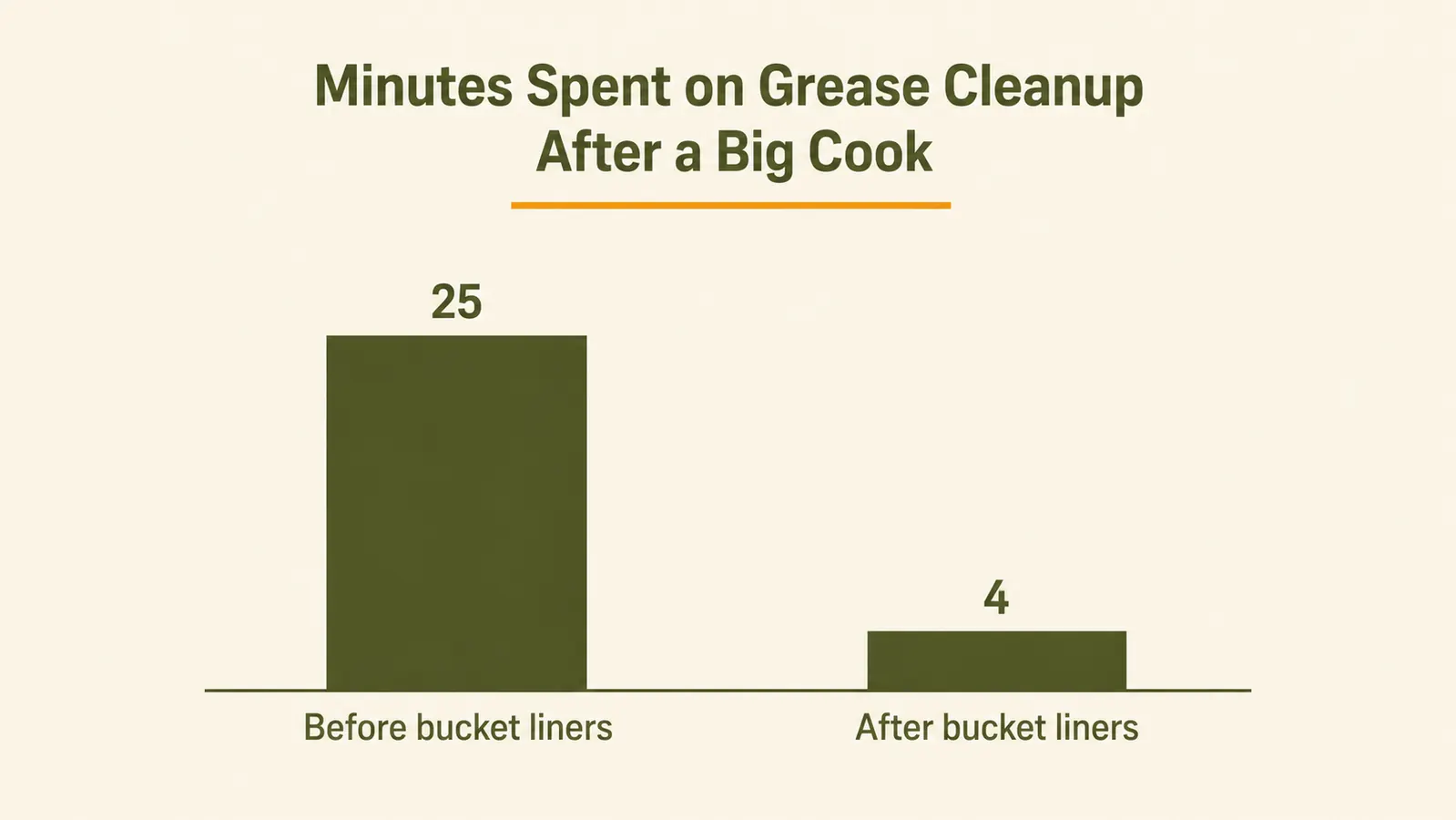
It's also changed how fast I can put the grill away. Before, cleanup after a big cook meant scraping the tray, hosing down the patio slab, and usually still finding a greasy spot two days later. Now it's pulling the liner, tying it off, and dropping it straight in the trash. I timed it out of curiosity: the old routine ran about 25 minutes on a heavy cook day, the bucket and liner swap is closer to 4. Over a year of weekends, that adds up to a lot of time I'm not standing over a hose after everyone's already gone home.
There's a safety angle too that I didn't think much about when I bought it. A pooled tray of hot grease sitting under the firepot is a real flare-up risk, and I've had exactly zero grease-related flare-ups since switching to the bucket system, versus two in the year before that I can remember clearly. If you want the full rundown on why that matters, I wrote up ten reasons a grease bucket saves you from a nasty cleanup that covers the fire risk side in more detail.
The Tradeoffs I Didn't Expect
The liner bags are the real ongoing cost of this system, and Traeger doesn't make that obvious on the box. You're buying a consumable every few cooks, not a one-time accessory, and if you cook as often as I do that's a line item worth knowing about going in. I've mentioned the generic-bag workaround already, but if you want zero surprises, budget for the real Traeger liners and treat them like pellets, something you restock before you run out rather than after.
I also considered just building something myself before I bought this. A disposable aluminum pan set under the drain tube costs less up front and needs no special parts. I tried that route for about a month before switching, and it worked fine for a single cook, but it meant carrying an open pan of hot grease across the patio every time, which is exactly the kind of spill risk the bucket system is built to avoid. I laid out the full side-by-side, including how each one handles a rainy Saturday, in the grease bucket versus foil pan comparison.
The other tradeoff is that this bucket is sized and mounted for Traeger's own bracket system. It's not something you can bolt onto just any grill without some fabrication, so if your pellet rig is a different brand, this exact product probably isn't your answer even though the idea behind it is worth copying.
What I Liked
- Keeps grease off the patio slab and out of the firepot area
- Swapping a liner takes under five minutes even on a messy cook
- Bracket has held up a full year of weekly use with no rust
- Noticeably fewer grease flare-ups since switching over
- Works well on both short weeknight cooks and long overnight smokes
Where It Falls Short
- Liner bags are an ongoing cost Traeger doesn't advertise clearly
- Bag sags on the longest cooks and looks messier by morning
- Generic liners are thinner and one tore on me
- Bracket needs an occasional quarter-turn tighten
- Built specifically for Traeger's mounting system, not universal
I timed it out of curiosity. The old cleanup routine ran about 25 minutes. The bucket and liner swap is closer to 4.
Who This Is For
If you're running a Traeger pellet grill most weekends, especially for a crowd, this is a straightforward fix for a real problem. Anyone cooking three or four times a week, or hosting the kind of cookouts where the grill runs for hours without a break, will get their money's worth out of not scraping a tray every single time. It's also a reasonable buy if you've had a grease flare-up scare you even once, because the bracket keeps drippings away from the firepot in a way the stock tray doesn't.
It's also a fair buy if you already keep a stock of consumables around for the grill, pellets, a chimney starter's worth of charcoal for the kettle, that kind of thing, since adding liner bags to that rotation isn't a big lift. If restocking small accessories isn't a habit you're used to, that's worth factoring in before you order one.
Who Should Skip It
If you cook once or twice a month, or your grill isn't a Traeger with the right mounting points, I'd hold off. A disposable foil pan or the stock tray, cleaned promptly, will do the job for light use without the recurring liner cost. It's also not worth buying if you're not willing to restock the bags, because using it without liners just turns it into a bucket that still needs scraping, which defeats the point entirely.
A year of weekend cookouts and this is still the accessory I reach for first.
If your patio slab has a grease stain creeping toward the door, the Traeger HDW152 bucket is worth a look before your next big cook.
Amazon Check Today's Price on Amazon →